
v2 micro1 storyboard
STORYBOARD CHANGES
There are roughly 34 creative changes and 18 new frames were recreated out of the 33.
Frame numbers in notes below no longer correspond to storyboard images due to requested deleted shots and changes.
Requested changes in Italics, changes in upright.
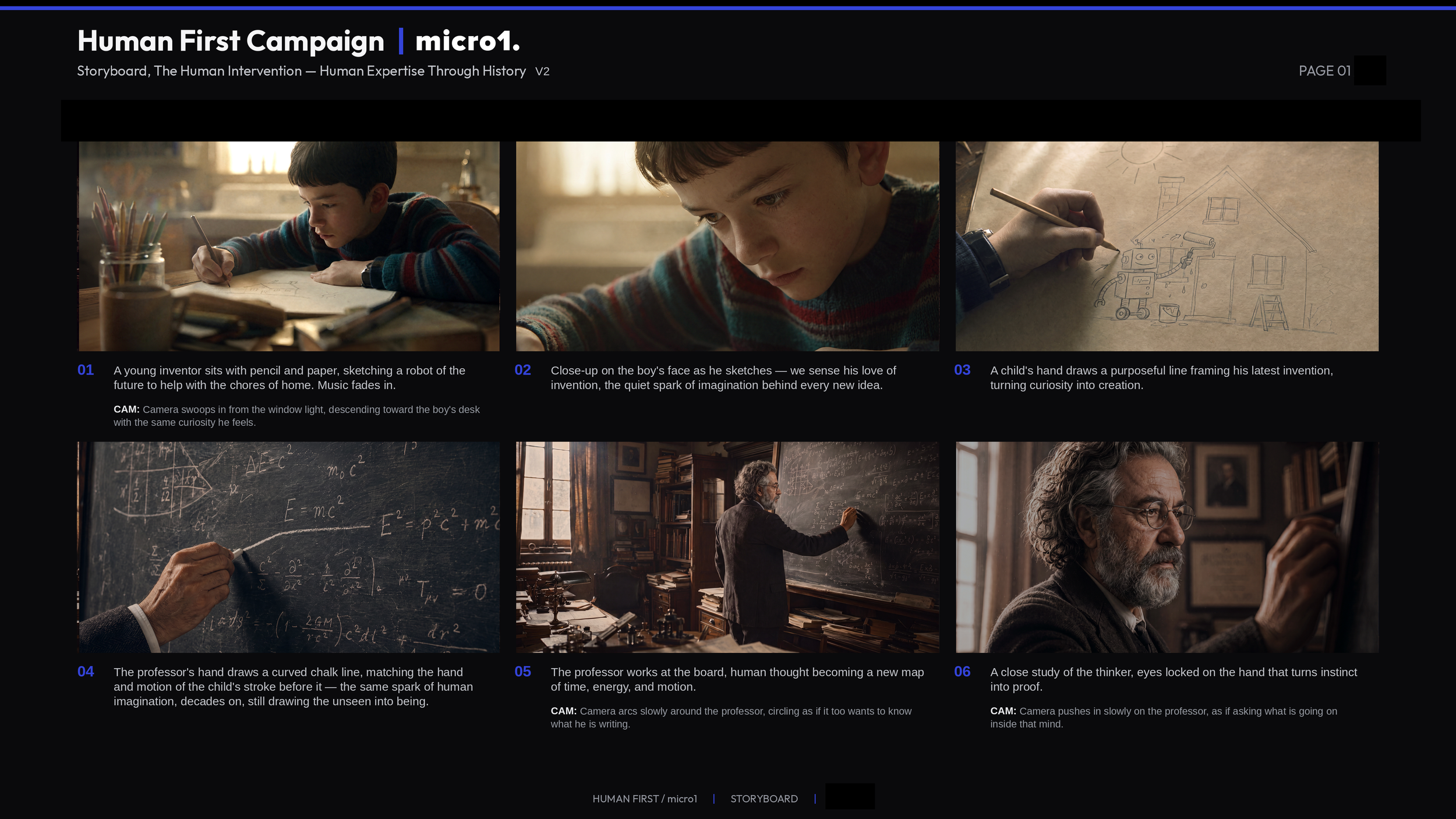
Frames 1–2
Simplify the environment. Frames 1-2 are tighter and focused on boy.
Keep the setting historical, but make it more time-neutral so it is not anchored to one specific era. All scenes are now chronological in history, and more time -neutral. Frames 1-2 start in early 1920, and story progresses to modern day.
Simplify the child’s drawing so it feels more authentically childlike while still suggesting invention. Childlike robot created.
Frames 3–7
Keep the equations. Done.
Replace Einstein with an anonymous mathematician, scholar, engineer, or scientist. A scholar/professor replaces Einstein.
Make the new character visually memorable without resembling a recognizable historical figure. Done.
Use real historical scientists as loose visual inspiration without directly depicting one. No one depicted.
Keep the focus on humanity rather than one iconic genius. Done.
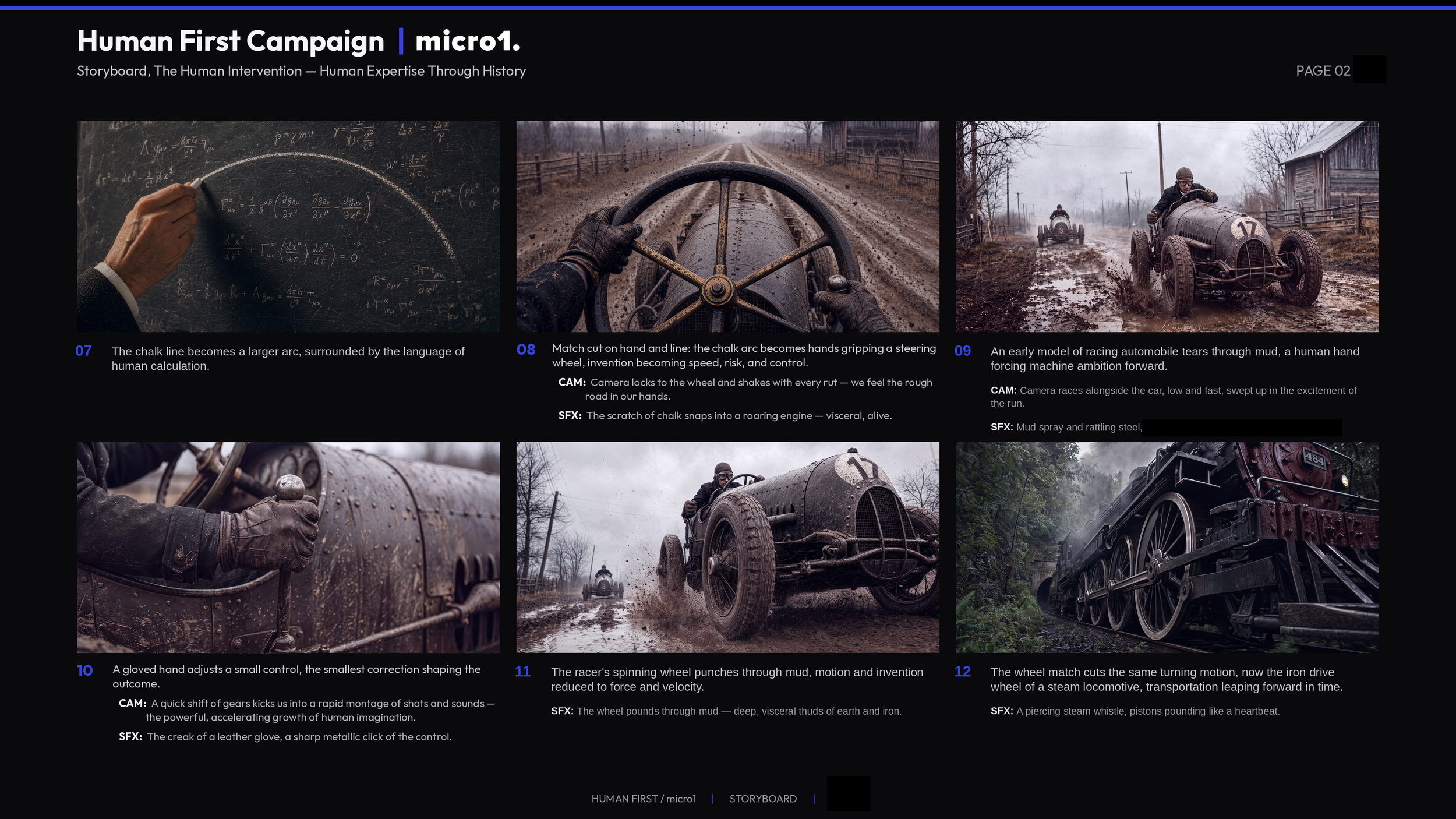
Keep Frame 7 because it remains one of the strongest transitions in the treatment. Done.
ACT 2 — Knowledge → Human Progress
Frames 8–15
Keep Frame 8 because it is one of the strongest transitions in the treatment. Done.
Remove the sign from Frame 9 so the image feels less tied to a specific time period. Done.
Keep Frames 10–13. Done.
Make the car in Frame 14 slightly more modern to show greater technological progression. Done.
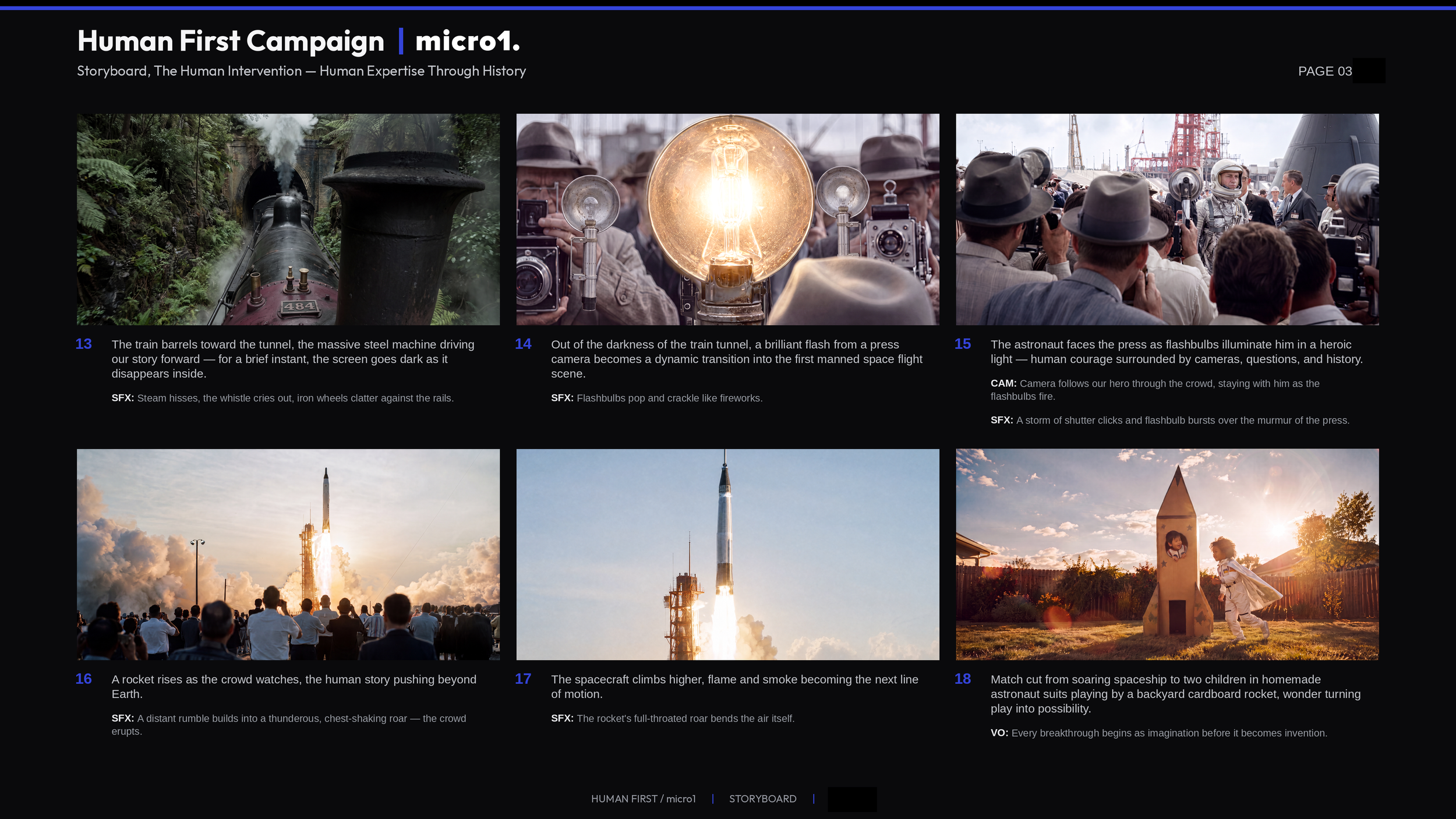
Remove the Edison sequence to simplify this section. Done.
Transition from the car or train entering a tunnel into complete darkness. Done.
Use a camera flash to illuminate the darkness and cut directly into the current Frame 19. Done.
ACT 3 — Exploration
Frames 16–19, currently Frames 19–22
Keep these frames. Done.
Frames 20–21, currently Frames 23–24
Replace the additional transportation sequence with a different visual or conceptual match cut. Use a speedboat for this sequence. Explore cutting directly from the rocket into the children or the Human Expertise section. The last option was selected, cutting from rocket to kids.
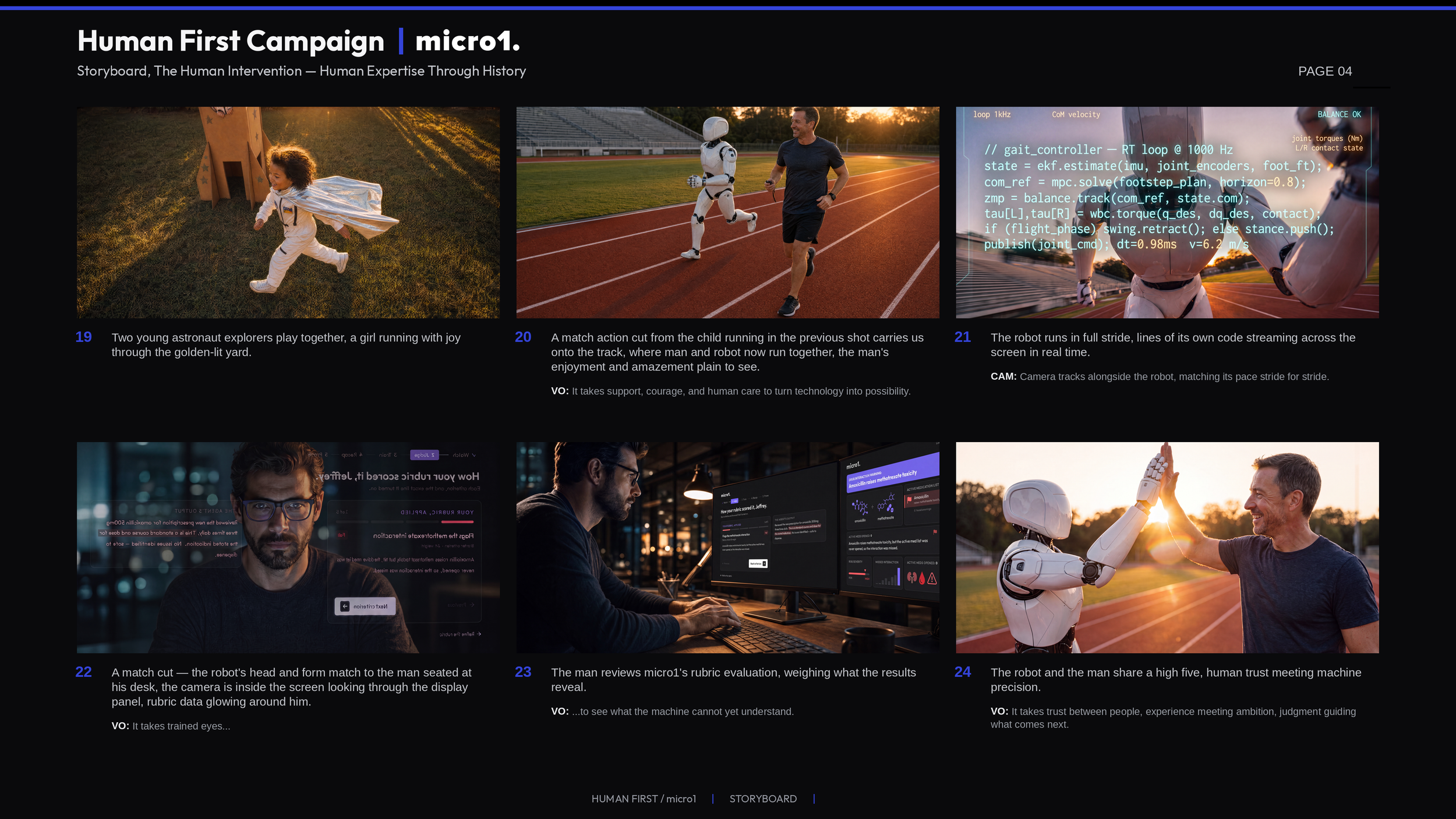
Consider using a visual match cut from the rocket into prosthetics or a laboratory environment. (see next note, robot is mentioned)
ACT 4 — Human Expertise
Frame 22, currently Frame 25
Make the prosthetic feel more robotic and mechanical. Use the updated prosthetic design to connect the scene more naturally to modern engineering and robotics. Robotics was chosen.
Frames 23–24, currently Frames 26–27
Keep the underlying concept but make the imagery feel less somber. New images were created for this showing a man with micro1 rubrics information displayed on screens.
Frames 25–27, currently Frames 28–30
Replace the boy building with an adult expert creating evaluation rubrics or reviewing data used to train AI. Rubrics scene was chosen.
Show the adult expert using AI to help analyze information or solve a problem.Make this sequence a more specific and ownable representation of what micro1 does. Rubrics scene.
Keep Frame 30. Done.
ACT 5 — AI → Wonder
Frames 28–30, currently Frames 31–33
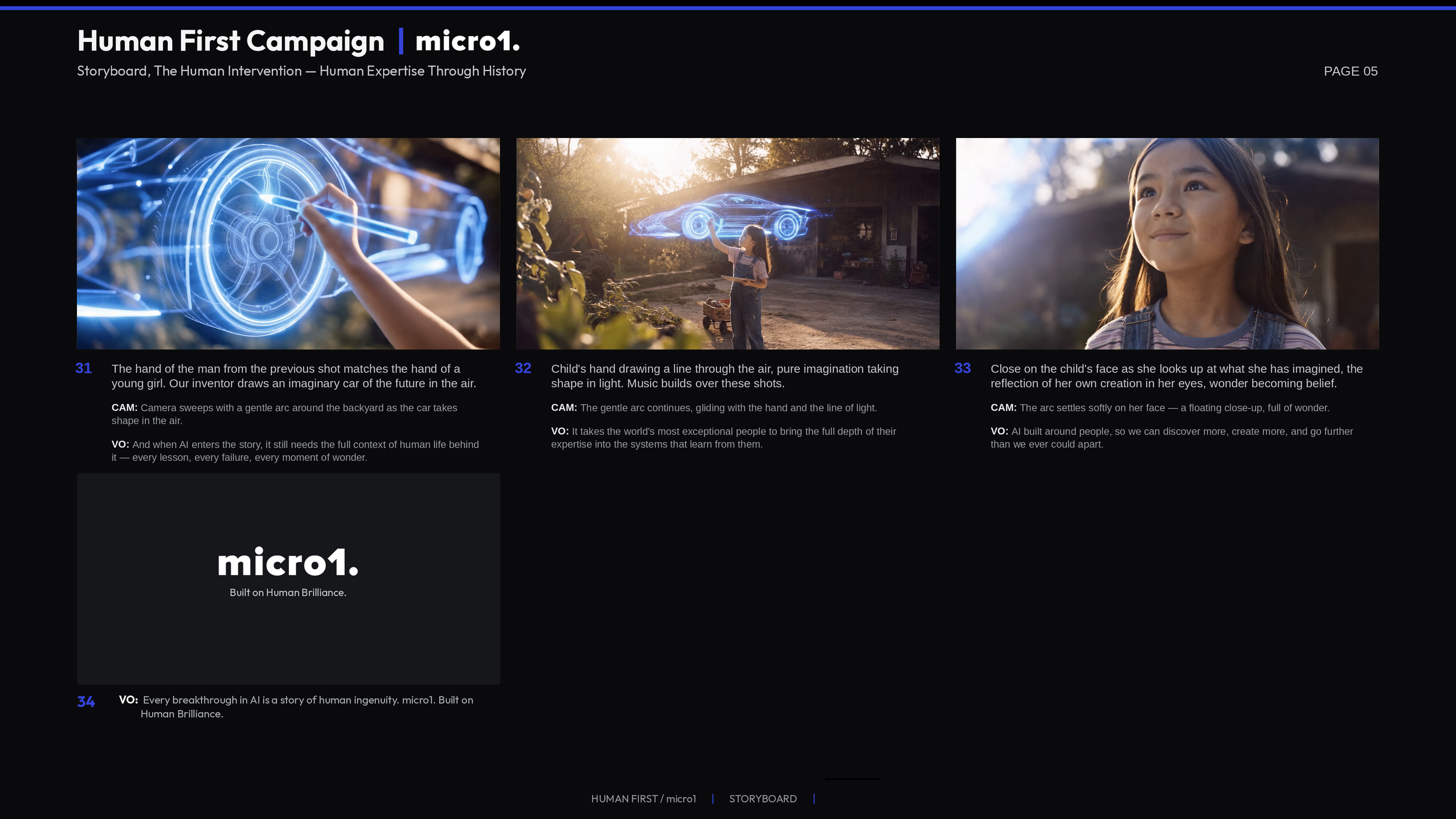
Develop additional conceptual directions for the ending before locking the final sequence. New scenes were added at end, right before child drawing.
Explore whether another scene is needed before returning to the girl. New scenes added before girl.
Remove or revise the line: “That’s what micro1 provides.”Done.
Make the ending connect more specifically to what micro1 does without feeling overly direct or explanatory. Rubrics scene hopefully accomplishes this.
Add a frame at the beginning or end that says something along the lines of: Made by humans, with the collaboration of AI. Robot scene and rubrics scene hopefully accomplish this.